
About LCCC
About Us
The History of Lancaster County Convention Center
The Lancaster County Convention Center opened in 2009 as a purpose-built downtown convention facility, but the story of the block it occupies goes back more than two centuries.
The development of LCCC was guided by a commitment to preserving the historic structures along South Queen Street rather than erasing them, resulting in a convention campus that carries genuine architectural and cultural significance alongside its modern event capabilities.
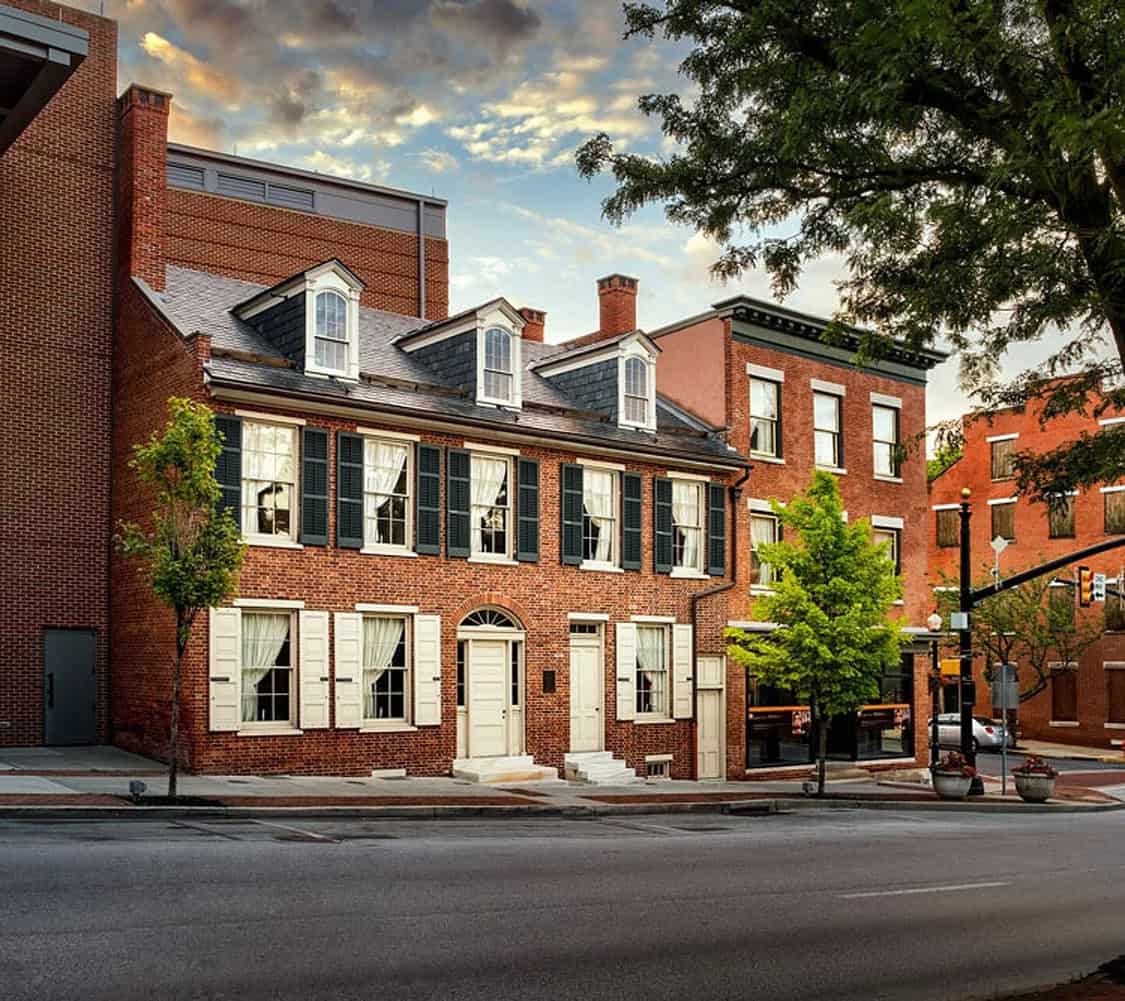
The project preserved and incorporated several 19th-century buildings into the new facility, including the 1804 William H. Montgomery House, the Beaux Arts facade of the former Watt and Shand department store, and the site of Thaddeus Stevens' historic home and law office at 45 South Queen Street.
The result is a convention center that feels distinctly different and a destination that gives visitors a tangible connection to some of the most important chapters in American history.
The Buildings Behind the Convention Center
The William H. Montgomery House
Built in 1804 for prominent Lancaster attorney William Montgomery, the Montgomery House is one of the finest surviving examples of Federal-period architecture in Pennsylvania and the only documented local work by architect Stephen Hills, who also designed the first Capitol building in Harrisburg. The building served as a residence, a YWCA, and various commercial uses before being acquired by the Watt and Shand Department Store in 1960. It stood vacant after 1995 until its exterior was restored during the construction of the hotel and convention center complex from 2006 to 2009. The interior rehabilitation was completed in 2013, and the Montgomery House now serves as one of LCCC's most distinctive event spaces.
Meeting Spaces
The Watt and Shand Building
The preserved Beaux Arts facade of the Watt and Shand building has stood on East King Street since 1898. The family-run department store, started by Peter Watt and James Shand, operated for over 100 years before closing in 1992. The building received four facade additions over the years, the last as late as 1924, and is listed on the National Register of Historic Places. Today, the restored facade forms part of the convention center's architectural identity along East King Street, with the curved corner wall now serving as the street entrance to Plough restaurant.

The Thaddeus Stevens and Lydia Hamilton Smith Historic Site
A Future Champion of Equality
The Birth of Lydia Hamilton Smith
A Safe Haven for Freedom Seekers
A Remarkable Partnership
Carrying the Legacy Forward
A Lasting Legacy
Unearthing the Past
Preserving History
Bringing Their Stories to Life
Did You Know?
Lancaster's history runs deeper than most visitors expect. A few facts worth knowing:
- Lancaster served as the capital of the United States for one day on September 27, 1777
- The word "stogies," used to describe long cigars, originated with the Conestoga Wagons that came from Lancaster County
- Milton Hershey's first successful business was the Lancaster Caramel Company, founded here before he went on to build his chocolate empire
- Lancaster was founded in 1729 as one of America's first inland communities, and several of the nation's most foundational principles, including religious freedom, social diversity, and the democratic process, took shape here
Community Impact
The Lancaster County Convention Center is more than an event facility. As one of the most significant developments in downtown Lancaster in the modern era, LCCC has played a meaningful role in the economic and cultural life of the city since opening in 2009.
The convention center draws hundreds of thousands of visitors to Lancaster City each year, supporting the restaurants, hotels, shops, and attractions that make downtown Lancaster a vibrant destination. Major conventions, trade shows, public events, and community gatherings bring regional and national audiences to a city that consistently earns recognition for its quality of life, its arts scene, and its culinary culture.
Beyond its economic contribution, LCCC's preservation of historic structures along South Queen Street reflects a commitment to honoring the history of the community it serves. The development of the Thaddeus Stevens and Lydia Hamilton Smith Historic Site within the convention center walls represents a particularly meaningful investment in telling the full and complex story of Lancaster's past.
The Lancaster County Convention Center Authority oversees the facility as a public asset, ensuring that LCCC continues to serve the interests of the Lancaster community while competing effectively as a regional and national event destination.